5 of the best hiking & trekking destinations in Africa
Most visitors to Africa stay firmly inside their safari vehicle. But for the intrepid traveller, the continent offers an unparalleled opportunity to immerse yourself in the natural environment. Trek to the summit of dramatic peaks, climb ancient volcanoes or explore pristine rainforest, surrounded by the world’s most exotic animals and luscious plant life. Discover our top five picks for hiking and trekking in Africa.
1. Drakensburg, South Africa
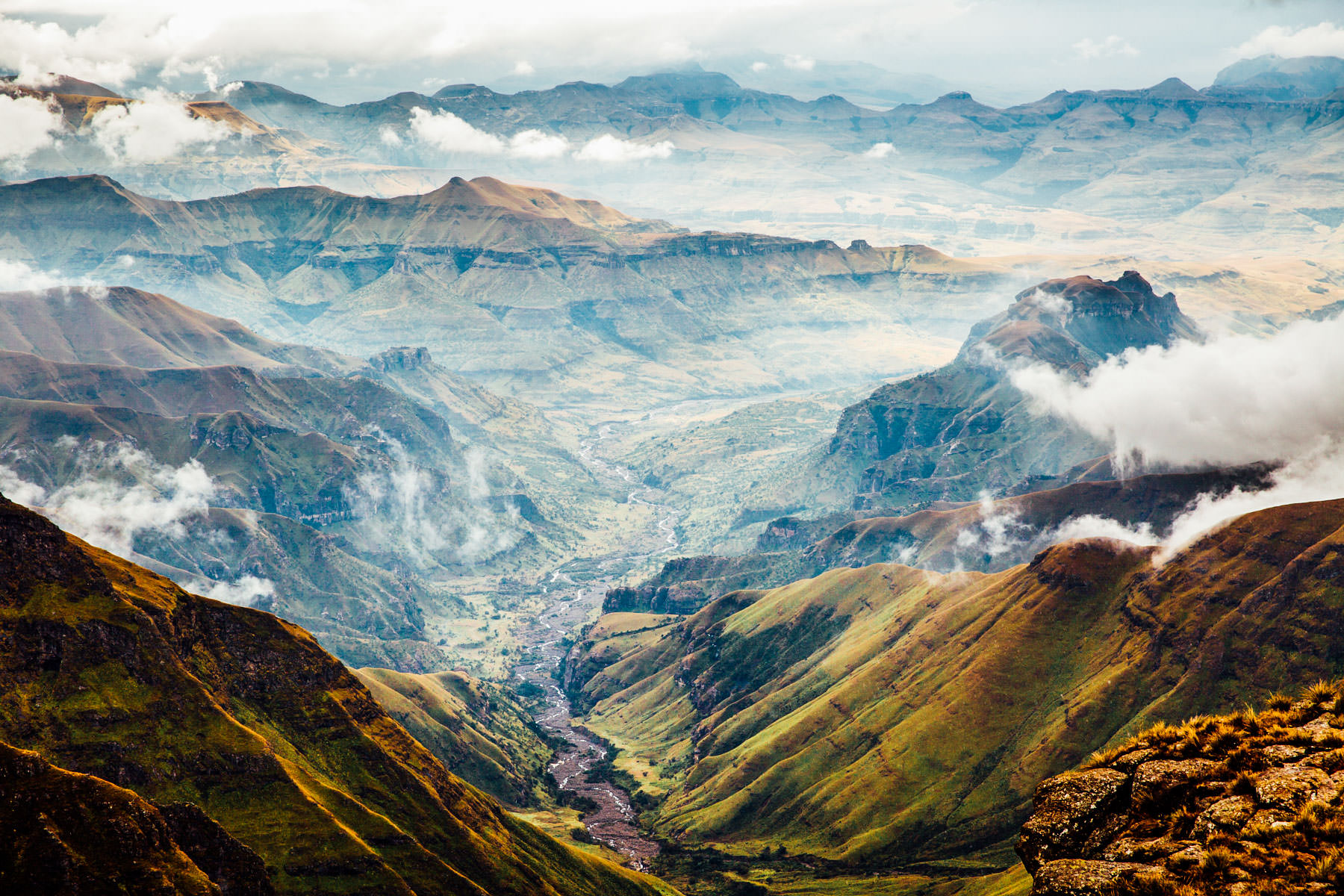
The Barrier of Spears, as it is called in isiZulu, extends for more than 200 kilometres across southern Africa. Africa’s highest mountain range reaches almost 3,500 metres and spreads across the South African provinces of the Eastern Cape, Limpopo, Mpumalanga and KwaZulu-Natal, as well as Lesotho and Swaziland.
Trails here range from walk-in-the-park to gruelling, multi-day, high altitude epics. It’s one of Africa’s best regions for hiking with families and children (particularly in Southern Drakensburg) while also offering challenging, technical treks reserved for only the most experienced. The most popular region for trekkers is the uKhahlamba Drakensberg National Park in KwaZulu-Natal close to the border of Lesotho. It’s a spectacular World Heritage Site of towering sandstone cliffs, enormous peaks and hidden valleys.
For a quick – though challenging – hike, it’s hard to go past Ploughman’s Kop. The trail starts at Mahai campsite in the shadow of the mighty wall of the Amphitheatre, one of the most impressive cliff faces on earth. The seven-kilometre trail takes around three hours with a steep ascent and descent, but hikers can cool off in the clear, icy waters of the route’s many swimming holes.
The Thukela Gorge hike is a 14-kilometre roundtrip route offering spectacular views of the Amphitheatre. The 11-kilometre Rainbow Gorge is a relatively easy trek through one of the most beautiful regions of the Drakensberg, around Cathedral Peak, and is also good route for children. The name comes from the sparkling rainbows that are formed as the sun streams through the spray of the water cascading over the sides of the gorge.
Drakensburg trails range from walk-in-the-park to gruelling, multi-day, high altitude epics. It’s one of Africa’s best regions for hiking with families and children while also offering challenging, technical treks reserved for only the most experienced.
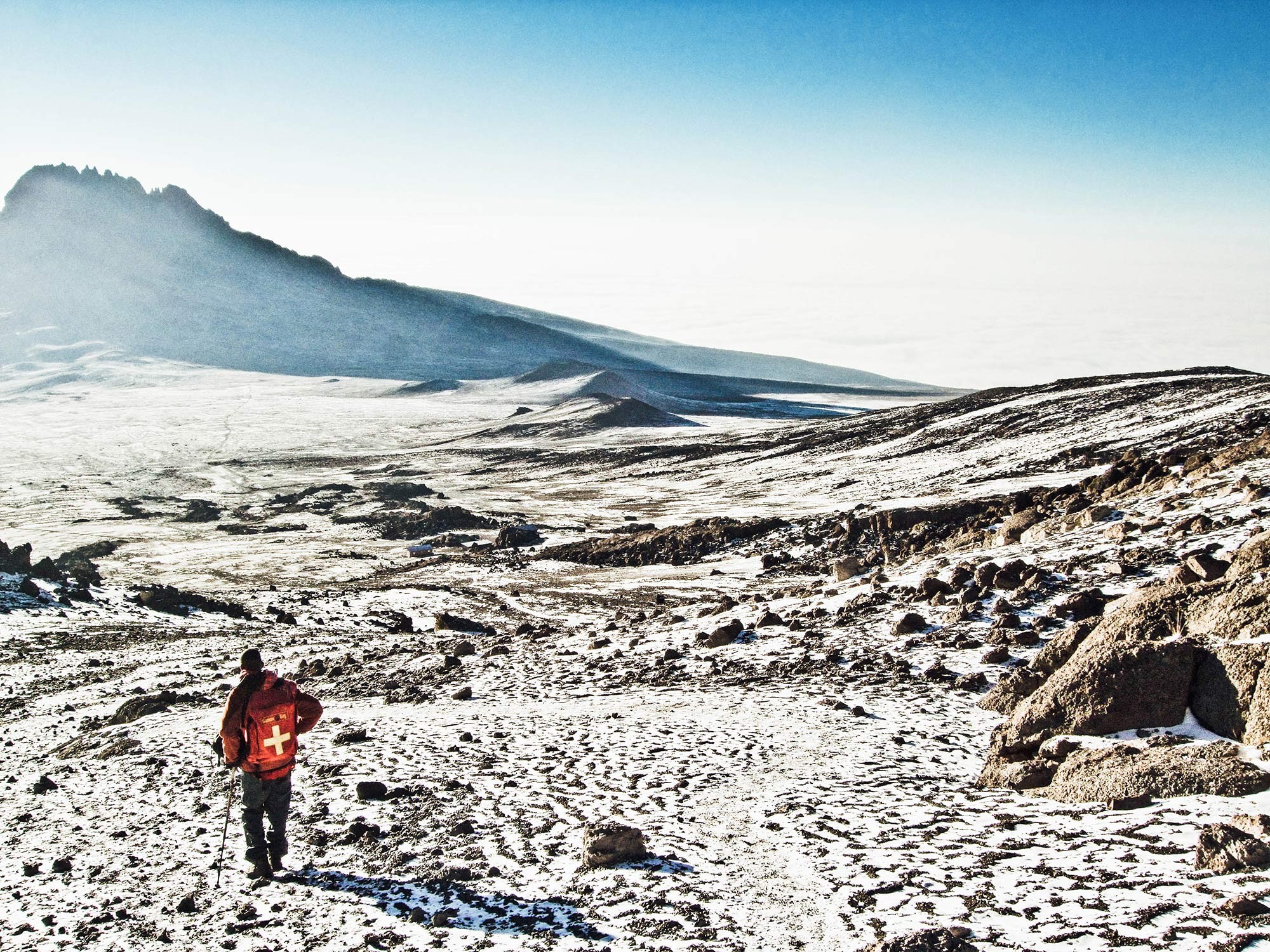
2. Kilimanjaro, Tanzania (pictured below)
This 5,895-metre above sea level peak is your chance to stand on the Roof of Africa. Mount Kilimanjaro attracts thousands of climbers each year and, though it requires no technical skills, it’s be no means an easy feat!
There are seven established routes to the top that vary in length and difficulty. Two are more challenging than others and all are multi-day treks that require trekkers to spend the night in huts or to make camp. The Marangu Route is the easiest route up the mountain with a gradual, steady ascent. It’s most popular among tourists and the only one that offers sleeping huts with modern conveniences, hence its nickname the Coca Cola Route.
Other routes attack the mountain from all directions, from the dry northeast in Kenya to the gentle slopes of the Lemosho Glades in the west. The Machame Route is the most popular camping route, with six to seven days of pretty – yet rugged – climbing. True adventurers can tackle the Umbwe Route, the most challenging in terms of grade and terrain.
Whichever way you choose to ascend Kilimanjaro, it’s an unforgettable journey and a challenge for even the most experienced climber.
3. Fish River Canyon, Namibia
Stretching for 180 kilometres through southern Namibia, the Fish River Canyon is the second largest canyon in the world (behind only the Grand Canyon). It runs from the tiny outpost of Seeheim to the Orange River, which forms the border between Namibia and South Africa. Nature reserves protect most of the canyon and its rich variety of bird and animal life.
Fish River Canyon is not for the inexperienced hiker. It is regarded as one of the toughest hikes in southern Africa, so you’ll need to be fit and well prepared. The standard trail is 85 kilometres, though many people take a shortcut that brings it down to around 71 kilometres. Whichever route you choose, be prepared for a four to five day journey with up to eight hours of walking a day through rugged terrain and multiple river crossings.
The trail is only open during winter, from May 1 to September 15. Most hikers carry their own provisions, though a handful of luxury operators can organise a guided trek complete with a chef and porters. On the plus side, the region is malaria free so you won’t need to worry about preventative medications.
There’s no denying that Fish River Canyon is a challenging journey, but those who take it on are well rewarded. It’s one of the world’s last true wilderness areas and completing it is a worthy achievement for any adventurer. Landscapes are stark yet stunning, with sparse vegetation, towering rock faces and deep ravines. Baboons are plentiful and they will happily observe hikers from rocky outcrops. Look out for the majestic black eagle, Hartmann’s mountain zebra, kudu, dassies (rock rabbits) and – if you’re very lucky – even leopards.
Fish River Canyon is not for the inexperienced hiker. It is regarded as one of the toughest hikes in southern Africa, so you’ll need to be fit and well prepared.
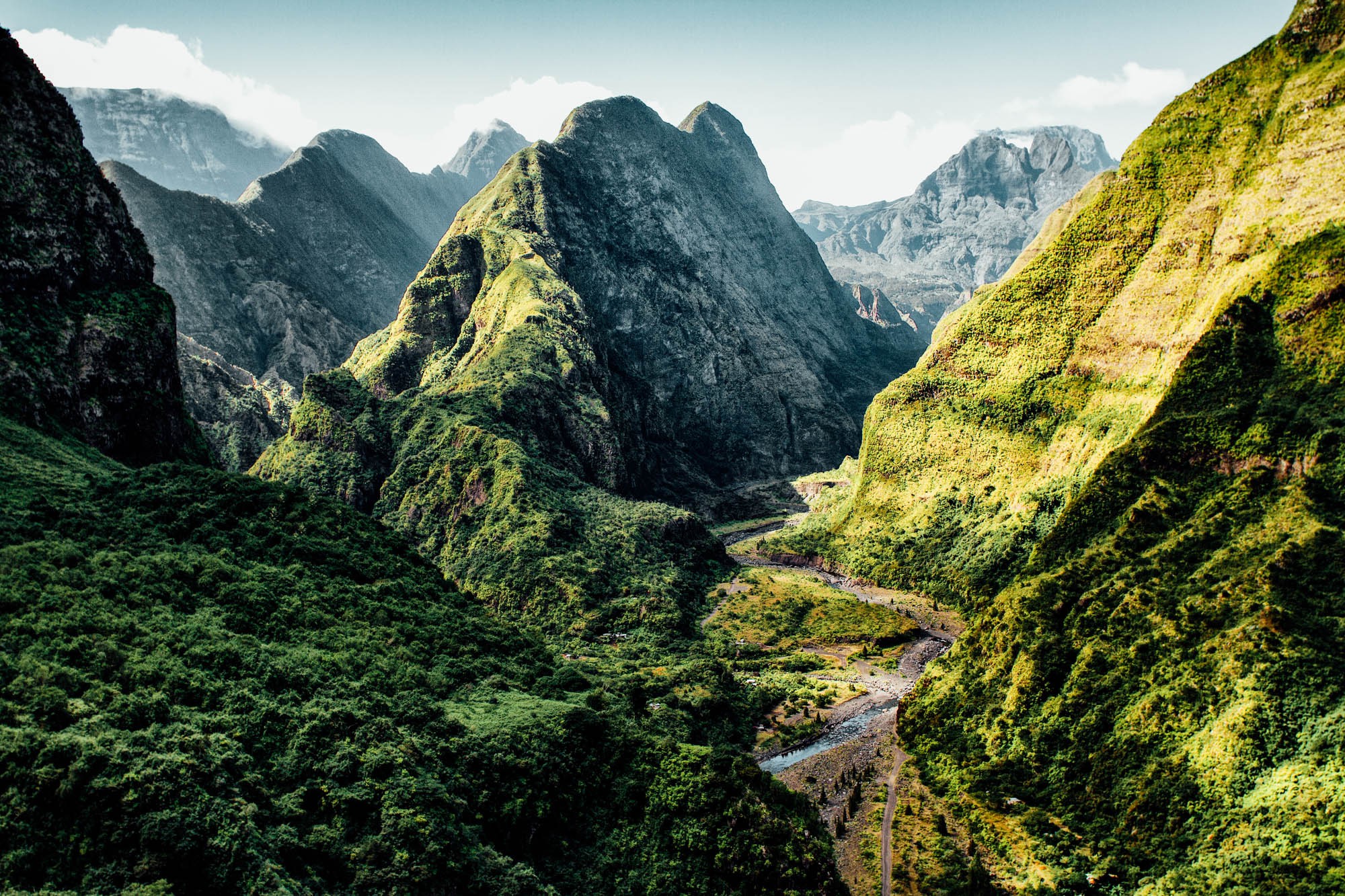
4. Reunion Island (pictured below)
This jewel-like island rises dramatically from the Indian Ocean around 900 kilometres to the east of Madagascar. Imposing peaks covered in vibrant tropical rainforest are ringed by white sand beaches and pinch-yourself turquoise water. The whole island of Reunion is a playground for hikers, with more than 1,000 kilometres of trails running through lush volcanic mountains and along spectacular coastline.
The majority of hikes on the island can be done in a single day, ranging from quick 90-minute jaunts to more challenging routes of around 30 kilometres that will take up to eight hours. There is even a whole classification of short trails designed with families in mind, called the sentiers marmailles.
The island is a French overseas territory so it’s only natural that food is a big part of the experience. When it’s time for lunch your guide will invariably unpack a spread of baguettes, camembert, pate and red wine. It’s a little indulgence to reward all that hard work.
The highlight of the island is unquestionably Cirque de Mafate, one of Reunion’s three volcanic amphitheatres. The area is accessible only on foot or by helicopter and within its walls is an alpine paradise of meadows, waterfalls, peaks and gorges. There are a few small mountain huts for those who wish to spend the night.
5. Table Mountain, South Africa
It’s South Africa’s most iconic landmark, the enormous flat-topped mountain towering over the city of Cape Town. The 500 million year old Table Mountain rises to just over 1,000 metres and attracts thousands of hikers each year. The mountain’s ecosystem is remarkable, with more plant species per square kilometre than a tropical rainforest.
There are hundreds of routes on Table Mountain, ranging from walking trails to serious climbing, sometimes involving rope work. The Platteklip Gorge Ascent is the most direct route to the top of the mountain, but also one of the most challenging. Though the route is only four kilometres in length, it can take up to four hours to reach the summit with a steep, sustained ascent on a rocky trail through a sheer gorge. On a clear day the views over Cape Town and the coast are incredible. Luckily a cableway has run to the summit of the mountain since 1929, meaning weary hikers can choose to take the easy route for one leg of the journey.
The Table Top Explorer is a circular route that runs from the Upper Cableway Station and takes in Maclear’s Beacon, a rock cairn that marks the mountain’s highest point, as well as the little-visited Hely-Hutchinson Reservoirs. There are commanding views in every direction. Alternatively, you can climb the distinctive Lion’s Head mountain, just next to Table Mountain. On a clear day the views are breathtaking, with a particularly good vantage point for Robben Island. It’s a short walk, taking around two hours, though some sections are steep with chains to pull yourself along.
And there’s more…
When it’s time to take off your hiking boots, Africa is brimming with some of the most extraordinary experiences in the world to experience while you are there.
- It would be unthinkable to come to Africa without taking a safari in any one of the incredible parks that dot the continent. From Sabi Sands widely considered the best safari destination in South Africa, to Botswana’s Okavango Delta or the Great Migration through the Maasai Mara in Kenya, a safari is an experience you can’t have anywhere else in the world.
- Don’t miss the opportunity to trek with rare mountain gorillas in Rwanda or Uganda and come face to face with these endangered primates.
- Marvel at the wonder of Victoria Falls, a two-kilometre wide mass of thundering water, mist and noise that will shake the ground under your feet. View it from Zimbabwe or Zambia.
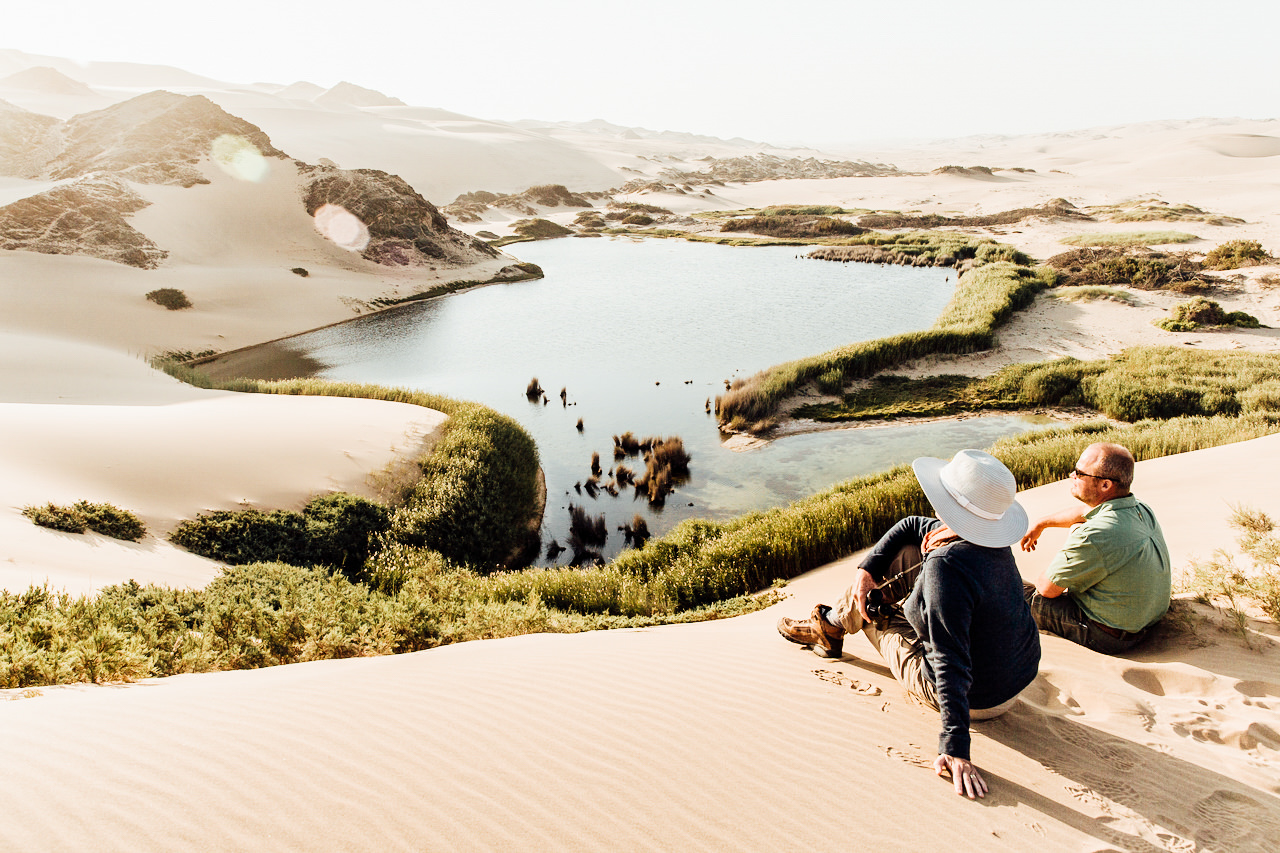
- Walk through the stark, barren beauty of Namibia, from the red dunes of the Namib Desert to the lonely sands of the Skeleton Coast.
- Then indulge in South Africa, sampling the fantastic food and wine produced around Cape Town. Be humbled by history at Robben Island and stand on the edge of the earth at the Cape of Good Hope.
